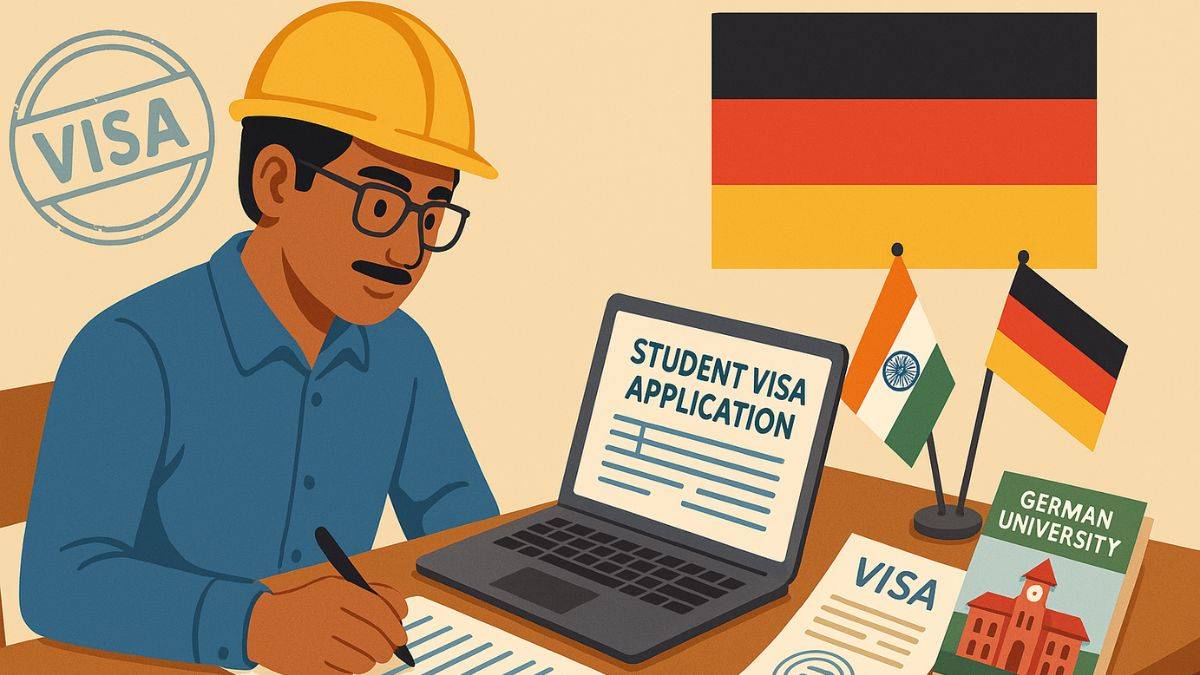

Germany remains a top destination for international students in 2026, offering tuition-free public universities, world-class programs in engineering, IT, medicine, and business, and excellent pathways to high-paying jobs and permanent residency. With over 400 universities and more than 400,000 foreign students annually, Germany combines academic excellence with a strong economy, vibrant culture, and clear routes to long-term stays via post-study work and the EU Blue Card.
Non-EU/EEA applicants need a Germany student visa 2026 to enter and study legally. The process is straightforward but requires proof of finances, health insurance, and academic intent. Health insurance is mandatory under German law (§5 SGB V), and lacking it leads to visa rejection or issues with healthcare access.
Key 2026 updates include the fully digital Consular Services Portal (rolled out in 2025) for faster applications and a stable blocked account requirement of €11,904 per year (€992/month). This guide covers the visa process, insurance, post-study work (18 months job search), top career opportunities with starting salaries of €50,000–€70,000+ in in-demand fields, and pathways to permanent residency—equipping you for success.
Who Needs a German Student Visa?
EU/EEA/Swiss citizens enter visa-free and need only a residence permit after arrival (via local Ausländerbehörde after address registration).
Visa-exempt non-EU nationals (e.g., USA, Canada, Australia, Japan, UK, South Korea, New Zealand, Israel) enter for 90 days without a visa but must apply for a study residence permit within that time, with proof of admission, finances, and insurance.
Most non-EU/EEA nationals (e.g., from India, China, Nigeria, Pakistan, Brazil, Turkey) require a student visa in advance due to high application volumes and scrutiny.
Quick decision tree:
| Nationality Group | Visa Required in Advance? | Action Needed |
|---|---|---|
| EU/EEA/Switzerland | No | Register residence and apply for permit after arrival |
| Visa-Exempt (e.g., USA, Canada) | No for entry | Enter visa-free; apply for residence permit within 90 days |
| Non-Exempt Non-EU/EEA (e.g., India, Nigeria) | Yes | Apply at German embassy/consulate before travel |
Types of Student-Related Visas in Germany
The Student Visa (Visum zu Studienzwecken) suits confirmed university admission, lasts 3–6 months initially, converts to a residence permit, allows limited work (140 full/280 half days/year), and permits family reunification.
The Student Applicant Visa (Visum zur Studienbewerbung) offers up to 9 months for exams, interviews, or preparatory courses (e.g., Studienkolleg); extensions possible with progress; key for APS certificate countries (e.g., China, India).
The Language Course Visa lasts up to 1 year for intensive German courses; work restricted; convertible to student visa if advancing to university.
Student visas extend via renewable 2-year residence permits; post-graduation job search extends up to 18 months. In 2026, these align with EU skilled migration priorities.
Step-by-Step Application Process for a German Student Visa 2026
- Secure university admission via Uni-Assist or direct application; obtain acceptance letter (Zulassungsbescheid). For China, India, Vietnam: Get APS certificate (4–6 weeks).
- Gather documents: Valid passport (6+ months validity), biometric photos, Videx form, motivation letter, CV, transcripts.
- Prove finances: Deposit €11,904 into blocked account (Sperrkonto) via Expatrio, Fintiba, or Coracle (fees €50–€150). Alternatives: DAAD scholarship or sponsor declaration.
- Arrange initial health insurance (travel/private, €30–50/month); switch to full plan post-enrollment.
- Submit digitally via Consular Services Portal; book embassy/VFS appointment (apply 3–4 months early).
- Attend interview; pay €75 fee; track application (6–12 weeks processing).
- Upon approval: Register address (Anmeldung) within 2 weeks, then apply for residence permit.
Bundle blocked account and insurance for efficiency.
Mandatory Health Insurance for International Students in Germany
Health insurance is required for visa, enrollment, and residence permits, covering high medical costs.
Public (GKV) suits under-30 degree students: €140–€150/month in 2026 (student rate); providers like TK (English support), Barmer, AOK.
Private (PKV) is mandatory for over-30s, PhDs, preparatory/language students: €79–€130/month; providers like ottonova, MAWISTA, Feather, Expatrio bundles.
| Aspect | Public (GKV) | Private (PKV) |
|---|---|---|
| Eligibility | Under 30, degree at recognized uni | Over 30, PhDs, non-degree |
| Cost (2026) | €140–€150/month (fixed student rate) | €79–€130/month (varies by age/health) |
| Coverage | Comprehensive basics; family inclusion | Extras like dental, single rooms |
| Pros | Affordable, stable premiums | Faster service, better perks |
| Cons | Longer waits | Higher long-term costs, irreversible switch |
Post-Study Work Opportunities and Job Market in Germany
Graduates receive an 18-month job-search residence permit extension to find qualified employment (any job allowed initially for support).
In-demand fields include engineering, IT, medicine; starting salaries: €50,000–€70,000+ (e.g., software engineers €55,000–€65,000; mechanical engineers €50,000–€60,000).
Top companies hiring international graduates: Siemens, SAP, BMW, Bosch, Deutsche Telekom, Volkswagen, Airbus—many offer graduate programs with visa support.
Search via StepStone, LinkedIn, XING; learn German for better prospects; network at university career services.
Pathway to Permanent Residency and EU Blue Card
Transition from student visa to work visa/EU Blue Card.
EU Blue Card requires qualified job; 2026 thresholds: €50,700/year standard; €45,934.20/year for shortage occupations/new graduates.
With B1 German: Permanent residency after 21–33 months on Blue Card; citizenship after 5–8 years.
Benefits: Work freely, sponsor family, access higher salaries.
Cost of Living and Budgeting Tips
Blocked account provides €992/month; realistic costs: rent €400–€700 (shared/student dorms €250–€400 via Studierendenwerk/WG-Gesucht), food €200–€300, insurance €140–€150, transport €50.
Common Challenges, Tips, and Post-Arrival Essentials
Rejections (<5%) often stem from insufficient finances, weak motivation letters, or document gaps. Apply early; use official checklists; bundle services.
Post-arrival: Register address within 14 days; open bank account (N26/Commerzbank); work up to 140 full/280 half days/year.
Conclusion
The Germany student visa 2026 opens doors to tuition-free education, strong careers (€50,000+ starting salaries), 18-month post-study work, and fast-tracked permanent residency via EU Blue Card.
Start today: Secure admission, open blocked account/insurance via Expatrio or Fintiba, and prepare your application.
I am interested