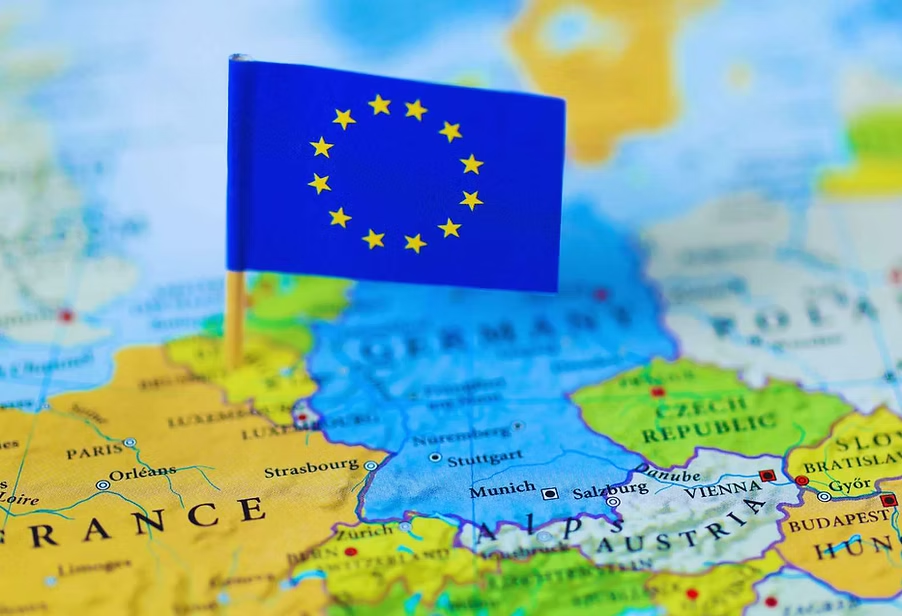
Germany continues to face a significant skilled worker shortage in 2026, with demand soaring in sectors like IT, engineering, healthcare, natural sciences, and other STEM fields. This has made the EU Blue Card (Blaue Karte EU) one of the most sought-after pathways for highly qualified non-EU professionals aiming to relocate and build long-term careers in Europe’s largest economy. Governed by Section 18g of the German Residence Act (AufenthG) and aligned with EU Directive 2021/1883, the Germany EU Blue Card offers a streamlined residence and work permit tailored for talented individuals.
Key updates effective January 1, 2026, include adjusted salary thresholds: €50,700 gross annually for standard occupations and €45,934.20 for shortage occupations, recent graduates (within three years of degree completion), or qualified IT specialists. These changes reflect annual adjustments tied to pension insurance ceilings, ensuring the program remains competitive while addressing labor market needs.
While self-applications for the Germany Blue Card visa are possible, the process involves intricate documentation, degree recognition, and compliance checks that often lead to delays or rejections. Common pitfalls include mismatched qualifications, insufficient salary proof, or overlooked Federal Employment Agency approvals. This is where professional immigration lawyer services for Germany Blue Card become invaluable. Experienced attorneys specializing in German immigration law can conduct thorough eligibility assessments, prepare flawless applications, and navigate bureaucratic hurdles, dramatically improving approval odds.
This article delves into the EU Blue Card Germany requirements in 2026, the application process, common errors, and why enlisting an immigration lawyer for EU Blue Card is a smart investment for skilled professionals seeking a smooth transition to working and living in Germany.
What Is the Germany EU Blue Card and Who Qualifies in 2026?
The Germany EU Blue Card is a prestigious residence and work permit designed for highly qualified non-EU nationals, granting unrestricted access to the German labor market. Its key benefits include full work and residence rights, freedom of movement within the Schengen area, immediate family reunification with spouses entitled to work (no German language requirement), and an accelerated path to permanent residency—typically after 27 months with basic German (A1 level) or 21 months with B1 proficiency.
In 2026, core EU Blue Card Germany eligibility criteria remain focused on attracting top talent:
- A recognized university degree (or equivalent) verified through the Anabin database or a ZAB Statement of Comparability.
- A binding job offer or contract from a German employer, valid for at least six months and aligned with your qualifications.
- Minimum gross annual salary: €50,700 for most occupations; reduced to €45,934.20 for shortage occupations (requiring Federal Employment Agency approval), young professionals (degree obtained less than three years ago), or certain cases.
Special provisions apply to IT specialists without a formal degree: at least three years of relevant experience in the last seven years qualifies them for the lower threshold.
Shortage occupations in 2026 encompass an expanded list, including IT and communications technology professionals, engineers, natural scientists, mathematicians, healthcare workers (doctors, nurses), managers in manufacturing/construction/logistics, and educators.
The EU Blue Card stands out from general work permits (§18b AufenthG) by offering EU-wide mobility after 18 months and simpler family benefits.
Immigration lawyers play a crucial role in eligibility verification. They expertly assess degree comparability via Anabin/ZAB, confirm salary compliance with 2026 thresholds, and determine if your role qualifies for the lower shortage threshold—preventing early rejections and identifying optimal pathways for Germany Blue Card visa success.
The Blue Card Application Process: Step-by-Step Guide
Applying for the Germany EU Blue Card in 2026 involves two primary routes, depending on your location and nationality.
From abroad: Most applicants start with a national D-visa (employment) at a German embassy or consulate. Use the online portal (digital.diplo.de) to schedule an appointment, submit documents, provide biometrics, and attend an interview. Upon approval, enter Germany and convert the visa to a Blue Card residence permit at the local foreigners’ authority (Ausländerbehörde).
From within Germany: Visa-free entrants (e.g., from the US, Canada, Australia) or those already on another permit can apply directly at the Ausländerbehörde.
Detailed steps for a successful EU Blue Card application:
- Eligibility check: Confirm degree recognition (Anabin or ZAB) and job offer details.
- Secure a qualifying job: Ensure the contract meets duration, qualification match, and 2026 salary thresholds (€50,700 standard; €45,934.20 reduced).
- Gather documents: Valid passport, job contract, salary proof, recognized degree, health insurance (travel or incoming German coverage), housing proof, and biometrics photos. For shortage thresholds, include Federal Employment Agency pre-approval if needed.
- Submit application: Book embassy/Ausländerbehörde appointment; pay fees (around €100).
- Processing and entry: Await decision (typically 2-12 weeks; faster with employer-initiated accelerated procedure under §81a AufenthG).
- Finalize in Germany: Register address (Anmeldung), attend Ausländerbehörde appointment for Blue Card issuance (valid up to four years).
The fast-track accelerated procedure, often coordinated by employers, can reduce timelines significantly by bundling approvals.
An immigration lawyer for Germany Blue Card transforms this process. They compile and translate documents accurately, secure appointments amid high demand, prepare you for interviews, initiate fast-track procedures, and monitor for delays. In complex cases—like IT experience-based applications or regulated professions requiring licenses—lawyers ensure compliance, avoiding costly restarts. Professional guidance is especially vital for Germany Blue Card visa applicants navigating 2026 updates, ensuring swift approvals and a stress-free relocation.
Common Mistakes and Pitfalls in Blue Card Applications
Despite its appeal, EU Blue Card Germany applications frequently encounter issues leading to delays, additional requests, or outright rejections—often forcing applicants to restart and risking job offers.
Top pitfalls in 2026:
- Documentation errors: Incomplete submissions, such as mismatched job descriptions, invalid passports, untranslated certificates, or incorrect visa categories.
- Salary non-compliance: Offers below the updated thresholds (€50,700 standard; €45,934.20 shortage) or lacking clear gross annual proof (including bonuses/variables).
- Qualification mismatches: Unrecognized degrees (not in Anabin or without ZAB comparability), jobs not aligning with education/experience, or missing Federal Employment Agency approval for lower thresholds.
- Health insurance gaps: Insufficient proof of adequate coverage upon entry.
- Timing issues: Applying prematurely (before job start) or overlooking pre-approvals; regulated professions (e.g., medicine) lacking required licenses.
- Family reunification oversights: Delaying spouse/child applications, leading to separation.
Consequences are severe: Rejections can expire visas, forfeit opportunities, incur extra costs, or trigger appeals with uncertain outcomes.
Real-world examples include IT professionals rejected for inadequate experience documentation or engineers falling short on salary due to overlooked 2026 adjustments.
Immigration lawyer services mitigate these risks through meticulous pre-submission audits, comprehensive checklists, and proactive corrections. Lawyers spot qualification gaps early, secure necessary approvals, and handle appeals efficiently if issues arise. For Germany Blue Card visa seekers, this expertise prevents common errors, safeguarding your relocation plans.
Why Hire an Immigration Lawyer? Key Benefits and Services
In 2026, navigating EU Blue Card Germany requirements grows more nuanced with annual salary adjustments, expanded shortage lists, and evolving procedures. Staying abreast of these changes demands expertise—precisely what specialized immigration lawyers provide.
Core benefits of hiring an immigration lawyer for EU Blue Card:
- Up-to-date expertise: Attorneys track 2026 thresholds (€50,700/€45,934.20), new shortage occupations (e.g., broader IT/healthcare inclusions), and policy shifts.
- Personalized assessments: Early reviews identify strengths (e.g., lower threshold eligibility) or gaps (degree recognition needs), charting the fastest route.
- Comprehensive support: Full document preparation, certified translations, application submission, embassy/Ausländerbehörde coordination, and fast-track initiation (§81a).
- Risk reduction: Expert handling of complex scenarios—like degree-free IT paths, regulated professions, or family cases—minimizing rejection odds.
- Time/stress savings: Lawyers manage appointments, follow-ups, and queries, freeing you to focus on your career move.
- Long-term planning: Guidance toward permanent residency (21-27 months) and potential citizenship, including language integration advice.
Fees for Germany Blue Card lawyer services vary but typically range from consultation to full representation; the value far exceeds DIY risks, where errors can cost thousands in lost wages or restarts.
For skilled professionals targeting Germany EU Blue Card visa, legal assistance ensures higher success rates, smoother transitions, and peace of mind amid bureaucratic complexities.
What to Expect When Working with an Immigration Lawyer
Engaging immigration lawyer services for Germany Blue Card follows a structured, client-focused process.
It begins with an initial consultation—often free or low-cost—where the lawyer reviews your qualifications, job offer, and circumstances, providing a realistic eligibility quote and fee estimate.
Ongoing collaboration involves secure communication (email/portals) for document requests, updates, and queries. Expect regular progress reports, deadline reminders, and explanations of each step.
Lawyers maintain high success rates by leveraging specialized knowledge in Migrationsrecht (immigration law), ensuring thorough preparations that outperform self-applications.
When selecting a lawyer, prioritize those titled Fachanwalt für Migrationsrecht (certified immigration specialists), with proven EU Blue Card Germany experience, positive reviews, and transparent pricing. Check bar association listings or platforms for verified professionals.
This partnership delivers efficient, professional representation for your Germany Blue Card visa journey.
Conclusion and Next Steps
The Germany EU Blue Card remains a premier gateway for skilled non-EU professionals in 2026, offering stability, family benefits, and a swift path to permanent residency amid Germany’s talent needs. However, updated rules add layers of complexity that can derail applications.
Professional immigration lawyer services elevate your chances, turning potential obstacles into a seamless process.
Don’t risk delays—contact a qualified immigration lawyer for EU Blue Card today for a personalized assessment and confident start to your German career.